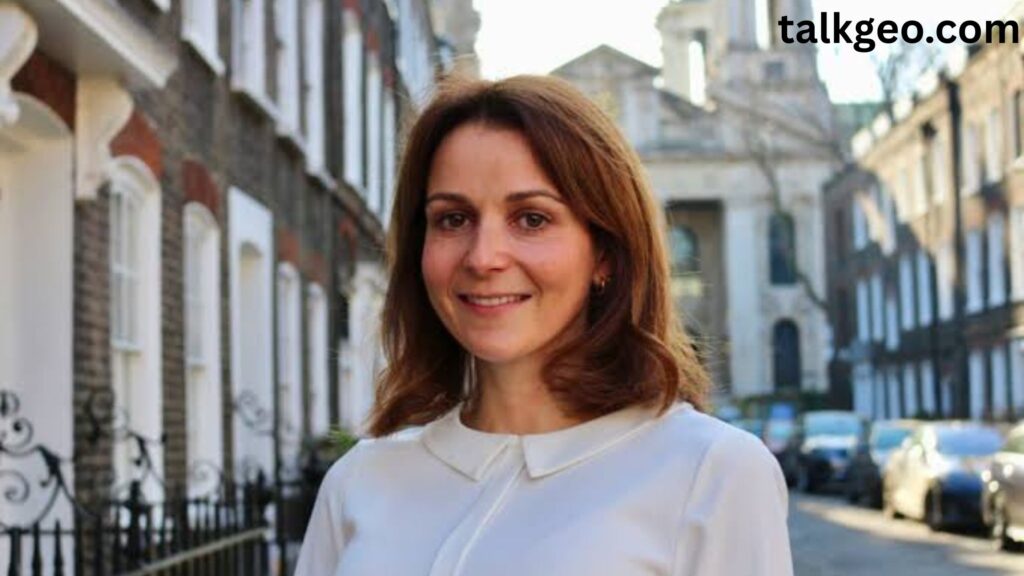
British journalist and political analyst Annabel Denham covers Westminster politics, free-market economics, public policy, and media discussion. Readers know her political analysis and opinion writing for The Telegraph and television and radio appearances on current events. She is known for writing, editing, and arguing for Britain’s future, not stardom.
That distinguishes her publicly. Denham is not a politician, but her work belongs there. She influences reader perceptions of parties, leaders, institutions, and policy despite not being a reporter. Parliament, business journalism, entrepreneurial policy, free-market think tanks, and national newspaper opinion define her career.
Career, not personal life, defines Denham. Since her name searches often contain her age, family, husband, salary, and financial worth, that matters. Reasonable profiles shouldn’t spark speculation. British right-of-centre pundit Annabel Denham covers business, state authority, public spending, and political responsibility.
Personal and Family History
Annabel Denham hid her childhood. Reliable public profiles omit birthdate, hometown, parents, and family background. British journalists, especially professionals, maintain their privacy. It means writing about her life should start with facts, not internet rumors.
Denham’s public identity is mostly education, work, and criticism. Her public image is not lifestyle or family-oriented. Her writing and lecturing cover politics, economics, policy, and public discourse. Her professional focus has been on her arguments, not her personal life.
Absence of private information may frustrate readers seeking a thorough biography. Denham’s public demeanor is also reflected. She is famous in political media but keeps her personal life private. This border is reasonable for an institution and national choice critic.
Intellectual Development and Education
For Denham, Manchester and SOAS universities provide education. Public professional postings list her Manchester French and History degree and SOAS International Studies postgraduate coursework. These subjects suited the following profession. Combining politics, culture, history, language, and international events helps public debate writers.
Commentators learn continuity and consequence from history. Writers learn to look beyond politics to institutions, leaders, and social norms. International and French studies emphasize Europe, statecraft, and political culture outside Britain. Denham’s later writing demonstrates a broader perspective even on domestic issues.
Her schooling led nowhere academic. Instead, it apparently prepared her for politics and journalism. Argument, editing, communication, and public persuasion were her methods, not research. Her career revolved around that mix.
First Steps Westminster
Formerly, Denham was a Parliamentary researcher for Lord Peter Lilley. Lilley served in the House of Lords and as a Conservative cabinet minister under Major. Parliamentary research is rarely appealing but can teach. Policymaking, political reasoning, and Westminster operations are taught.
That kind of experience helps future commentators. It reduces politics to briefs, speeches, amendments, meetings, and deadlines. Party politics behaviors including allegiance, conflict, messaging, compromise, and public language vs private strategy are also taught to young researchers. Later writings by Denham often address these themes.
Working around Parliament is closer to Conservative tradition than reading about it. Denham worked for free-market and center-right groups, but Westminster gave her political power. One thing is to suggest government should be smaller, sharper, or more disciplined. The machines look different up close.
City A.M. Years in Business Journalism
Denham then worked in business journalism at City A.M., a London finance, markets, business, and policy daily. Business and entrepreneurship were her roles. Politics, business, investment, start-up, worker, and employer issues were connected at this career-defining moment. She went from research to public-facing journalism and editing.
Business journalism raises different questions than politics. It investigates how tax changes affect firms, regulation affects growth, and why entrepreneurs struggle to start and scale. Writers must consider readers who value budgets, confidence, and opportunity over Westminster drama. In later economic views, Denham mirrored that background.
Denham works on British business issues at City A.M. Market, policy, and City of London watchers read it. Writing for readers interested in money, growth, risk, and political decisions was essential. Denham’s later essays often return to those issues, even in party politics or popular culture.
Forum for Female Entrepreneurs
Denham worked with The Entrepreneurs Network before The Telegraph. In her senior role, she participated in the Female Founders Forum, which focused on women entrepreneurs’ business issues. This time highlights Denham’s policy research, activism, events, communications, and journalism. She learned startups and business policies.
Finance, confidence, networks, growth, and business gender imbalance were explored at the Female Founders Forum. Not always in campaign group terminology, Denham was concerned in women’s economic engagement. Opportunity, growth, realistic reform, and ambition were her themes. Her methods reflect her free-market principles.
This is one of her most underrated career stages, but telling. This shows Denham’s public worries stretched beyond party politics and press opinion. She spent years in policy thinking about startup, barriers, and government help or hinderance. This backdrop makes her later thoughts on work, welfare, regulation, and production make sense.
Institute of Economic Affairs membership
The Institute of Economic Affairs hired Denham as Communications Director in 2020. The renowned British free-market think tank IEA supports lower taxes, deregulation, little government, and market-led reform. As top communications officer, Denham was embroiled in a heated ideological debate. State intervention, borrowing, furlough, lockdowns, and public health powers were daily political problems in Britain under Covid-19.
Timing made the job special. Communications directors at think tanks go beyond press releases. Research presentations, public arguments, news responses, and media representatives are your responsibility. Speed, judgment, and policy concept perception by journalists and spectators are needed. The setting may have helped Denham on TV panels.
IEA employment strengthened her free-market politics. Her admirers claim she brings intellectual consistency and economic seriousness to public discourse. Critics argue it makes her part of a state intervention-skeptical network. Her public image depends on the relationship. Denham focuses on Britain’s government and economic needs debate.
Moving to Telegraph
Denham gained national prominence in The Telegraph’s comments section. Conservative and center-right readers make the Telegraph powerful in Britain. Politically minded subscribers, consultants, activists, corporate leaders, and politicians read its opinion sections. This was natural but vital for writer Denham.
Denham edited and commented on politics for Telegraph. Her titles include political pundit and columnist. These jobs vary but include bylines and editorial influence. She has argued and used opinion page machinery to persuade readers.
This job matters in UK politics. Telegraph comments on Conservative Party direction, migration, welfare, taxes, leadership, and culture spread quickly in Westminster. That ecology incorporates Denham’s literature. It targets those who want political facts and analysis to comprehend Britain’s major concerns.
Annabel Denham Discusses
British politics, economy, public spending, welfare, universities, immigration, party identity, and national institutions are Denham’s topics. She writes right-of-centre, skeptical of state expansion and critical of politicians who avoid tough choices. Her seriousness assessments often use politics. Power and willingness to fail are the questions.
That makes her writing sharper than neutral analysis. Incentives, dependency, institutional weakness, cultural drift, and political promises vs. public experience interest her. She has written about the Conservative Party’s future, Labour’s governance, Reform UK’s rise, the welfare bill, universities, and British values. She leads British politics’ transition with her opinions on Brexit, austerity, Covid, and the cost of living.
Trust and state capability are the themes. Britain is too satisfied with decline, excuses, and institutional failure, says Denham. That diagnosis fits the current political climate, regardless of readers’ viewpoints. Her work is noticed beyond Telegraph readers because of it.
Advertising and Broadcast
The broadcasts further enhanced Denham’s profile. She has been on political forums, newspaper reviews, and live debates. TV and radio require separate registers. Simple, quick, and unqualified argument is required.
Like her broadcasts, her work is honest, ideological, and dissenting. She is portrayed as a political pundit, not a journalist. She is not trusted as a news source, thus this matters. Please evaluate the news.
Television has boosted her fame. People who seek for her may have seen her on a paper review before reading her columns. Denham represents a British political view: economically liberal, culturally distrustful of progressive institutions, and impatient with poor administration. Visible may make her admired and challenged.
Marriage, kids, personal life
Annabel Denham’s husband, children, and family are unknown. Her public persona ignores those difficulties. Professional biographies encompass her education, work, writing, policy, and media appearances. Articles claiming certainty about her spouse or children should be viewed carefully unless they give strong evidence.
This is essential when writing about journalists. Public commentators disclose their beliefs and opinions. They may not imply private partnerships. Denham’s personal life seems private.
Privacy does not impair biography. Only its shape changes. Marriages, celebrities, and personal drama are irrelevant. A woman in ideas, policy, business media, and politics is featured.
Wealth and Income
Public records do not corroborate Annabel Denham’s fortune. Unsourced estimations for journalists and pundits on several websites are unreliable. Quantifying net worth without financial disclosures, contracts, property records, or direct reporting is speculation. Responsible profiles shouldn’t create numbers.
Her revenue sources are simpler to determine. Journalism, editing, commenting, communications, think-tank leadership, and media are Denham’s credentials. Senior newspaper posts and TV commentary can produce professional media income: quantities vary. Publicity does not guaranty success.
Financial information is sought, but accuracy prevails. Denham is a successful journalist and policy communicator. Being certain about your net worth without proof is unfair. Actually, her funds are private.
Mistakes, criticism, and controversy
Denham works in a political environment where strong opinions produce powerful emotions. The right-of-center analyst linked to free-market organizations will be praised by her supporters and criticized by her detractors. Not scandalous. Opinion journalism features it.
Her views on welfare, migration, public spending, colleges, and culture may be criticized. They may argue that free-market critique minimizes inequality, public service pressures, and government aid to the poor. Some Denham followers claim he expresses what careful politicians avoid. Arguments usually revolve on Britain’s issues and who should remedy them.
Denham needs no personal controversy. Her beliefs question her public record. Explains her media job more honestly. She is not scandalous; she is part of a serious debate about Britain’s future.
Current Annabel Denham Location
Annabel Denham is a well-known Telegraph political commentator. Her research includes British politics, party realignment, welfare, public spending, institutions, and cultural conflict. One of a generation of analysts assessing a nation’s political and economic instability. Her writing appeals to those who think Britain’s ancient ways are crumbling.
Her career follows modern opinion journalism. She went beyond local reporting and newspaper apprenticeship. Parliament, business media, policy networks, think-tanks, and public opinion were her platforms. That made her journalism more ideological and policy-driven than others.
No post or event makes Denham important now. Her themes and writing platforms are consistent. Brits know her as a right-wing politician. That status makes her understandable, regardless of reader opinion.
Frequently asked questions
Who is Annabel Denham?
Political analyst, editor, and journalist Annabel Denham is British. She is widely known for her political commentary and Telegraph senior opinion roles. Her public work encompasses British politics, economics, public policy, welfare, universities, immigration, and the political right’s future.
Before joining the Telegraph, she worked in Parliament, business journalism, entrepreneurship policy, and think-tank communications. City A.M., The Entrepreneurs Network, Female Founders Forum, and Institute of Economic Affairs employed her. Policy analysis and free-market flavor come from her background.
Why is Annabel Denham famous?
Annabel Denham expresses right-wing political views. State size, public spending, welfare, political leadership, national identity, business, and institutional failure are her topics. Readers who desire interpretation and argument, not just news, are her audience.
Political debate shows and media reviews feature her. Her appearances reached people who may not read her columns. Her image is spread between print and TV.
What did Annabel Denham do before The Telegraph?
Before The Telegraph, Denham worked in politics, media, and policy. Her career included legislative research for Lord Peter Lilley, business journalism for City A.M., and entrepreneurship policy and Female Founders Forum advocacy for The Entrepreneurs Network.
2020 brought her to the Institute of Economic Affairs as Communications Director. That role put her in a top British free-market think tank. It connected her to public debates on government spending, regulation, Covid-era policies, and economic freedom.
Is Annabel Denham married?
Credible professional sources have not identified Annabel Denham as married. No spouse or children are known. Be wary of generic biography site claims without evidence.
Her public life emphasizes career and commentary over personal relationships. Respect that choice. A fair biography can discuss her career, institutions, and public ideals without revealing her personal life.
Age of Annabel Denham?
From trustworthy sources, Annabel Denham’s age is unknown. Online profiles can estimate it, but not prove it. Her academic chronology does not confirm her birth date.
Unknown is the best answer for her age. Write about a public pundit without mixing together personal details. Despite age, her career is vibrant and relevant.
Net worth of Annabel Denham?
Annabel Denham’s fortune is unknown. Online sums should be doubted unless they come from a credible financial source or direct disclosure. Many journalists and commentators keep their finances private.
Her income likely comes from journalism, editing, policy communications, opinion, and media. Professional sources are diverse but cannot reliably determine wealth. Actually, her wealth is private.
Annabel Denham’s politics?
Annabel Denham is a free-market, right-of-center politician. She worked for the Institute of Economic Affairs and other business, market, and policy groups. Government expansion, poor leadership, institutional drift, and public spending demands are her usual criticisms.
Her job is commentating, not politics. Her published work, not party allegiance, best defines her views. She writes philosophically but acts as an analyst, not a party official.
Conclusion
Celebrity family conflict is absent from Annabel Denham’s biography. Journalism and commentating cover politics, business media, policy, think-tank communications, and national opinion writing. That path informs her public voice and focus.
Her media sphere influences politically active readers’ views on Britain’s issues. Her work targets growth, welfare, migration, universities, state capacity, and the right’s future. These are important and contested subjects.
Most accurate Denham profiles divide public and private life. Her job and debates are public, but her personal life is private. Balance is not a story flaw. Is the tale.
To understand Annabel Denham, start with her work. Her essays and public commentary cover policy, enterprise, and Britain’s need for clearer political alternatives. She is a key voice in the country’s destiny, whether one agrees or not.