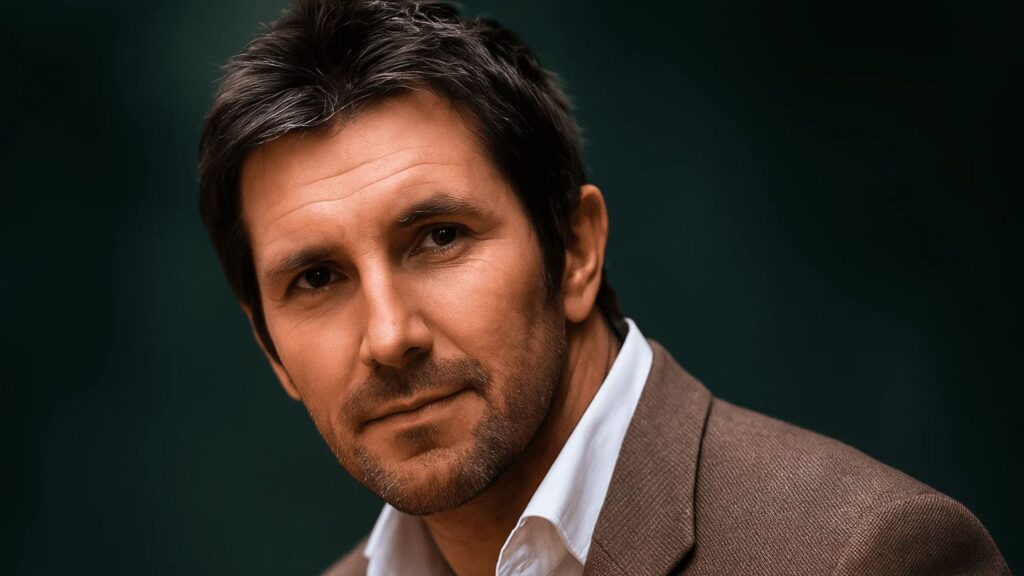
In the 1990s, Wimbledon FC was one of the few clubs in the vibrant world of English football that exemplified grit, passion, and unpredictability. Stewart Castledine, a dynamic midfielder, was among their ranks, and his career reflected both the challenges and rewards of top-flight football. His journey provides a captivating perspective on the early years of the Premier League and the ability of a footballer to reinvent himself beyond the pitch, despite the fact that his name may not be the most prominent feature on highlight reels.
Castledine is today acknowledged as a media personality, sports business executive, and the father of two prominent young talents: Leo Castledine, a Chelsea and England youth international footballer, and Kitty Castledine, an emerging actress in British television. Additionally, he is a former professional athlete.
This article delves into the life and legacy of Stewart Castledine, including his footballing origins, his time at Wimbledon and Wycombe, his transition into television and film, his involvement in the commercial side of sport, and his family’s expanding influence in athletics and entertainment.
Football Origins and Early Life
Stewart Mark Castledine was born in Wandsworth, London, England, on January 22, 1973. He developed a passion for the game at a young age, as he grew up in an era in which local football was firmly rooted in the community. His initial experiences, similar to those of many young Londoners of his generation, were gained through school football and local youth teams, where professional club scouts were consistently present.
Wimbledon FC, a club renowned for its unconventional approach and fierce independence, recognised Castledine’s early potential and recruited him into its junior system. The Wimbledon team of the 1980s and 1990s, which was affectionately referred to as the “Crazy Gang,” established a reputation for surpassing expectations. The club prioritised character, physicality, and togetherness over flash or flair under managers such as Dave Bassett and Joe Kinnear.
Castledine, a midfielder who was in the process of developing, found it to be an ideal testing ground. He internalised the club’s uncompromising approach and acquired an understanding of what it meant to compete at the highest level.
Wimbledon FC: The Premier League Years
Castledine transitioned to the professional game with Wimbledon in 1991, shortly prior to the establishment of the Premier League in 1992. He would devote the majority of his career to the Dons over the next decade, showcasing his versatility as a midfielder who could operate in both central and lateral positions.
Vinnie Jones, Robbie Earle, Marcus Gayle, and John Fashanu were cult figures in Wimbledon’s squad at the time, and their names were synonymous with hard work and intensity. Castledine was a significant squad member who embodied the same commitment and energy, despite not always being a first-team regular.
From 1992 to 2000, he appeared in 28 Premier League matches for Wimbledon, serving as a midfielder and occasionally providing attacking support. Wimbledon’s remarkable capacity to remain competitive in England’s top tier despite their limited resources was synchronised with his presence during this period.
Wimbledon FC experienced a period of instability in the late 1990s, culminating in the contentious relocation to Milton Keynes in 2003, as a result of ownership disputes and relocation debates. Although Castledine had already departed the club prior to that juncture, his tenure there remains inextricably linked to the identity of the “original” Wimbledon, a team that was renowned for its underdog defiance.
Loan and Permanent Transfer to Wycombe Wanderers
Castledine was loaned to Wycombe Wanderers, a club that competed in the lower tiers of the English Football League, from 1995 to 1996. The management was impressed by his performances, and he made a permanent move to Wycombe in 2000 after returning to Wimbledon for several more seasons.
Castledine contributed essential leadership and experience to the Wycombe squad. The club benefited from his professional background and tactical understanding, and he served as both a player and a mentor to his younger colleagues.
Castledine retired from professional football in 2002 due to the physical demands of the game and recurring ailments, which closed one chapter but opened several new ones.
Professional Qualities and Playing Style
Castledine was not the type of player who pursued the spotlight. He was a midfielder who prioritised the team and was renowned for his intelligence on the ball, positioning, and work ethic. Coaches regarded his capacity to read the game, close down space, and maintain discipline in midfield as valuable, despite the fact that he rarely appeared in goal tallies or headline moments.
He is frequently referred to as a “link player” by those who observed him during his Wimbledon years, as he was responsible for connecting defence and attack and performing the less glamorous tasks that enabled others to shine. His adaptability also enabled him to fulfil a variety of duties in accordance with the team’s varying requirements.
This professional humility would later be applied to his life beyond football, where his communication skills, teamwork, and leadership would prove advantageous in the fields of business and media.
Transition to Media and Television
Stewart Castledine promptly discovered a new platform—television—after retiring from the field. He was appointed as a presenter for BBC daytime programs, such as Big Strong Boys and Houses Behaving Badly, due to his effortless demeanour and unforced communication style.
In the early 2000s, both programs were prominent, as they aligned with the era’s preference for lifestyle, renovation, and DIY programming. Castledine’s relatable and down-to-earth demeanour resonated with daytime audiences, who valued the opportunity to witness former athletes apply their teamwork principles to real-world challenges.
He did not conclude his remarks at that point. Castledine also appeared in Hollywood, albeit briefly, in the 2006 comedy film The Pink Panther, where he played the French custodian. The film starred Steve Martin. His willingness to investigate new creative avenues and step outside the comfort zone of football was demonstrated by this fun footnote in his career.
Commercial and Modelling Work
Castledine was purportedly involved in commercial modelling, where she collaborated with fashion brands including Topman and DKNY, in addition to her work in television. Although this phase of his career was relatively brief, it demonstrated his adaptability and a wide range of interests across various industries.
Castledine’s professional discipline and personable image helped him remain relevant in the public sphere, despite the fact that transitioning from football to fashion and entertainment is not a common path.
A Career in Sports Business and Management
Castledine subsequently shifted his attention to the commercial aspect of sports in his later years. He became involved in athlete representation and sports marketing by leveraging his extensive network and on-field experience.
He currently occupies the position of Football Commercial Director at KIN Partners, a London-based sports and entertainment agency. Castledine is responsible for the coordination of brand partnerships, commercial agreements, and sponsorship strategies for organisations and athletes in this capacity.
He frequently is responsible for overseeing endorsements, negotiating contracts, and ensuring that athletes establish sustainable careers in both on and off the pitch. This transition illustrates the potential for professional footballers to transition into strategic roles that have an impact on the commercial landscape of contemporary sports.
The transition to sports management also aligns with a burgeoning trend among retired players: the utilisation of firsthand experience to mentor the next generation of talent and contribute to the industry’s business ecosystem.
Coaching and Relationship with AFC Wimbledon
Castledine has sustained a profound affinity for grassroots football, despite his post-playing endeavours. He dedicated time to mentoring the AFC Wimbledon Ladies team, imparting his expertise and experience to the younger players.
His participation exemplifies a more general theme in his life: the act of contributing to the sport that has had a significant impact on him. Castledine has consistently demonstrated his dedication to the notion that football is not solely about fame or money, but also about teamwork, growth, and opportunity, whether through mentoring aspiring professionals or supporting community initiatives.
Family and Personal Life
Stewart Castledine’s family is one of the most remarkable aspects of his narrative. In 2000, he married Lucy Alexander, a renowned British television presenter who was most renowned for her enduring role on BBC’s Homes Under the Hammer.
They have established themselves as one of the most quietly successful couples in British media, successfully balancing public visibility with private stability. Their partnership has endured the highs and lows of the media industry, demonstrating their shared values of humility, resilience, and hard work.
The Castledine family has also established itself as a creative and athletic dynasty, as both of their children have made significant progress in their respective disciplines.
Leo Castledine: Tracing His Father’s Football Path
Leo Castledine, their son, is one of the most promising rising talents in English football. Leo, who was born in 2005, began his junior career at AFC Wimbledon, the phoenix club that was established following the relocation of the original Wimbledon. His skill quickly garnered attention, resulting in a transfer to Chelsea FC’s academy, one of the most prestigious development programs in Europe.
Leo had made his senior début for Chelsea in the EFL Cup by 2024, demonstrating technical proficiency and composure that were far beyond his years. Subsequently, he acquired valuable first-team experience during loan stints with Huddersfield Town (2025–26 season) and Shrewsbury Town (2024–25).
Leo’s adaptability as a creative midfielder with goal-scoring potential and vision has been commended by observers. His style is slightly different from that of his father, as it is more technically refined and aggressive; however, the same level of commitment to professionalism is evident.
Stewart’s pride and perspective are exemplified by his son’s success at the highest level. He comprehends the significance of balance and guidance in the life of a youthful athlete, having personally encountered the demands of football.
Kitty Castledine: The Emerging Star of British Television
Kitty Castledine, the daughter of Stewart and Lucy, has established her own identity in the entertainment industry. She became a member of the BBC serial EastEnders in 2024, where she played Penny Branning, a character identified with one of the show’s legacy families.
Kitty’s casting garnered attention in part due to her familial background, but primarily due to her talent and charisma on screen. She is committed to furthering the Castledine family’s influence in British media by establishing a connection between athletics and entertainment as her acting career develops.
The Castledine Family in the Public Eye
The Castledines’ distinctiveness is not their fame for its own sake, but rather their pragmatic approach to success. Stewart’s football heritage, Lucy’s enduring TV career, and their children’s emerging profiles demonstrate a family that is guided by adaptability and perseverance.
They seldom pursue headlines or controversy, opting instead to allow their work to speak for itself. This has garnered them a reputation for authenticity, which is appreciated more and more in both media and sports.
Public Perception and Legacy
Stewart Castledine may not be featured in every highlight reel when Wimbledon fans reflect on the club’s Premier League years, but his contributions are an integral part of the organization. He embodied the type of professional footballer who contributed to the team’s overall success by surpassing the sum of its parts.
His career trajectory serves as a model for reinvention, a reminder that life can be equally rewarding when approached with curiosity and fortitude, beyond the field. Castledine’s transition from footballer to presenter, actor, and sports business executive exemplifies the adaptability that many athletes aspire to.
His family’s increasing prominence guarantees that the Castledine name will continue to be active in British culture for years to come, while his ongoing involvement in football through business and coaching continues to influence the industry from behind the scenes.
The Relevance of Stewart Castledine in 2025
The careers of players such as Stewart Castledine serve as a reminder to both fans and professionals that longevity in sports is not solely determined by the number of minutes played or goals scored as the game continues to develop. It involves the ability to adapt, learn, and contribute in a variety of ways.
His narrative is in alignment with numerous pertinent themes that are pertinent in 2025:
- The Influence of Reinvention: In the present day, athletes are required to begin preparing for their post-retirement careers at an earlier stage than they have ever done. Castledine’s seamless transition to media and business serves as a testament to the importance of education and planning.
- Balancing Family and Fame: In a media-saturated era, his family’s modest lifestyle demonstrates that public visibility does not have to be at the expense of privacy or integrity.
- The Persistent Influence of Wimbledon’s Legacy: Castledine and other players from the original era are regarded as the spiritual guardians of Wimbledon’s legacy as AFC Wimbledon continues to flourish as a fan-owned club.
- Castledine’s contributions to the future of professional athletes are responsible and sustainable as a result of his work in sports business and as a mentor. He is a champion of young talent.
Interesting Facts About Stewart Castledine
- He participated in the early seasons of the Premier League, which were the formative years that significantly influenced the development of contemporary English football.
- He was a co-presenter of BBC’s Big Strong Boys, a program that combined practical renovation advice with humour.
- Fans continue to regard his appearance in The Pink Panther (2006) as a beloved piece of trivia.
- He has served as both a player and a commercial strategist in the sports industry.
They became one of the few father-son duos to both play professional football in England after his son Leo made his debut for Chelsea.
Frequently Asked Questions (FAQ)
Stewart Castledine is the individual in question.
Stewart Castledine is a former English footballer who served as a midfielder for Wimbledon and Wycombe Wanderers. He subsequently transitioned to a position as a sports executive and BBC presenter.
What was the date on which Stewart Castledine played for Wimbledon?
He was a Wimbledon player from 1991 to 2000, and he made 28 appearances in the Premier League.
Now, what is his course of action?
He is presently employed as the Football Commercial Director at KIN Partners, where he is involved in the commercial aspects of football.
Is he related to Lucy Alexander?
Yes, Lucy Alexander is his wife. She is most renowned for her role as a co-presenter on the BBC program Homes Under the Hammer.
What is the name of his children?
His daughter, Kitty Castledine, is an actress on EastEnders, and his son, Leo Castledine, is a player for Chelsea FC.
What is the legacy of Stewart Castledine?
His legacy is rooted in his adaptability, as he transitioned from a professional footballer to a media figure and business leader, all the while fostering a family that continues to influence British sports and entertainment.
In conclusion,
Stewart Castledine’s life encapsulates the complete trajectory of a contemporary athlete, from youthful aspiration to professional achievement, reinvention, and enduring impact. The trajectory of his career is a testament to the resilience and evolution of footballers, demonstrating that their identity does not conclude with the final whistle.
Stewart Castledine’s versatility, dedication, and quiet excellence are exemplified by his roles as a Wimbledon midfielder, a BBC presenter, a sports business professional, and the father of two rising talents. In an era that is frequently preoccupied with instantaneous fame, his narrative is one of endurance and substance, and it continues to motivate individuals in the football community and beyond.