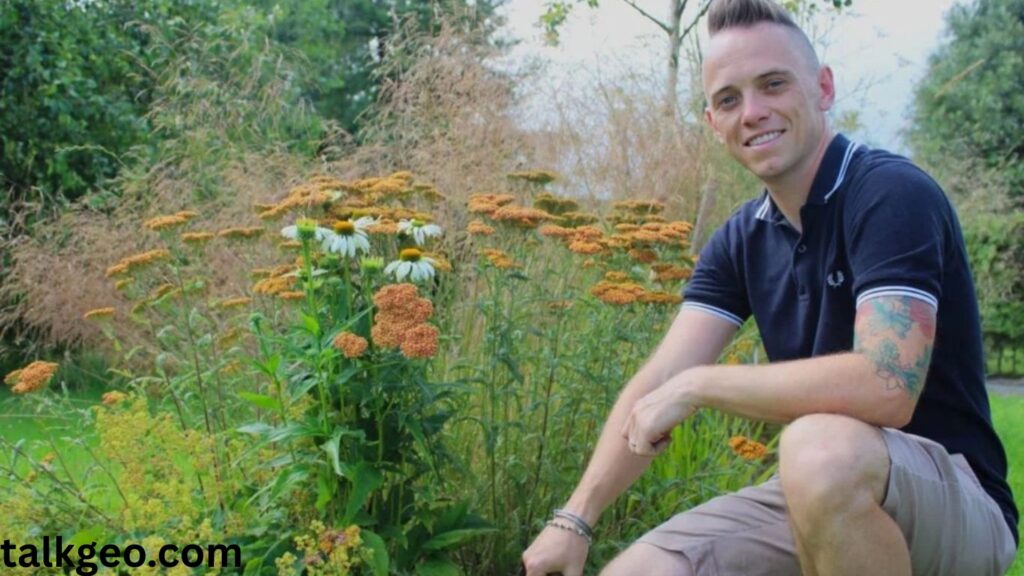
Lee Burkhill did not explode into the British horticultural scene as a smooth television personality waiting for the right camera. He built his reputation on soil, study, design work, on-line training and a great understanding of the sense of isolation many have in their own gardens. He is well known as Garden Ninja and has become one of the more approachable faces of UK horticulture, particularly to those who found him on BBC One’s Garden Rescue. His story is one not just of redefining his work, but of taking his personal love of plants and turning it into a public effort to de-stigmatize horticulture.
There is a Burkhill appeal that combines technical knowledge with plain-spoken assurance. He can talk about the structure of plants, the value of fauna, the seasonal attraction of gardens, the arrangement of the garden, without making it less accessible to novices. He has a strong practical background to his job, but his appearance, voice and method of teaching is unique in a subject that can tend to be traditional. To many viewers he is a new brand of gardening expert: media-savvy, blunt, inclusive and refreshingly honest about how much work is involved in keeping a garden looking well.
Meet Lee Burkhill
Lee Burkhill is a British landscape designer, horticultural instructor, TV presenter, writer, lecturer and online content provider. His most famous ventures include a design business, blog, YouTube channel, classes and public gardening advice, all under the Garden Ninja banner. He is most famous to television viewers as one of the designers on BBC One’s Garden Rescue, where he helps homeowners remodel their private gardens across the UK. He is somewhere between a professional garden designer and an accessible educator in the public eye, and therefore he is searched by TV fans and people who want practical gardening help.
Public records and his own professional materials show his birth month and year as February 1983. This puts him in the company of a generation of garden communicators born before social media arrived but who have built careers in the era of direct audience involvement, streaming footage, blogs and YouTube. Garden Ninja Garden Design is based in the North West of England and works with clients in Manchester, Liverpool, Southport, Cheshire and surrounding areas. His work has a national audience now, but his career still bears the marks of a regional practice that has succeeded thru skill, persistence, and media exposure.
Burkhill is also one of mainstream British gardening TV’s more notable LGBTQ+ characters. He’s spoken about the support he’s had from his close friends and family members in managing type 1 diabetes and has been openly open about his spouse. He doesn’t reveal everything about his personal life, so you need to profile him carefully. This is an image of a married designer who is verified, but keeps his family life private and uses his platform to speak about horticulture, health, inclusion and resilience.
Early Years and First Love for Gardening
“I was touched by horticulture at an early age, before it was a profession,” says Burkhill. His interest has often been related with his boyhood experiences with allotments, gardens and the pleasure of growing plants by hand. He has talked about the impact of his grandfather who introduced him to the rhythms of gardening, flowers and vegetables. This early link is important for it explains why gardening is not just a source of labor for him but also a location of safety and control.
Burkhill has spoken of being bullied as a teenager and finding comfort in gardening. It adds an emotional aspect to his latter style of teaching since he often talks to those who feel unsure, left out or are feeling overwhelmed. For him, the garden was not only a picturesque environment; it was a place where he could focus, learn and build self-confidence, away from the impact of others’ perceptions. This history explains why his public advise often shows a strong anti-snobbery streak.
His parents, brothers and sisters, childhood home, and particular schools are not well known to the public. Burkhill has decided to keep a lot of his early family life out of the media spotlight and therefore it is important that the absence of information is handled without assumption. His public utterances make it clear that gardening was a personal pleasure before it became a career ambition. It stayed with him thru childhood and age till at last he worked it into the core of his professional life.
Education, Training and the Road to Horticulture
Burkhill did not start his professional career as a full-time horticulturist. Before making Garden Ninja his vocation he has worked in the IT industry for over twelve years in project management. That earlier career might seem a far way from borders, dirt, planting plans and garden makeovers but it gave him talents that show thru in his creative work. Garden projects require planning, sequencing, funding, problem solving and the ability to respond to changing circumstances.
His training in horticulture offered a structure for the knowledge he had accumulated over many years of practical horticulture. His professional bio ties his study with formal horticultural education and he has been officially labeled as RHS qualified. This training explains why his advise is more than just enthusiastic, as the Royal Horticultural Society remains one of the most famous institutions in British gardening. He did not only present himself as a horticultural personality, but used time to learn the abilities needed.
It was not an overnight transformation from information technology (IT) to garden design. Burkhill has talked about a time of stress and unhappiness before deciding to change direction, with the backing of his wife. He is now regarded as a _________. This is done thru study, volunteering, practice, competition entry, business development and a progressive move into the profession. This approach makes his life story more attractive because many people know the dilemma between a secure job and a higher goal.
Garden Ninja Creations
Burkhill’s landscape design work was originally called landscape Ninja, which grew into a wider teaching platform. And the informality and memorability and a touch of mischief of the moniker suited his style. This means action over formality, which has allowed him to engage with gardeners who may have been shut out by conventional design language. But that whimsical name masks a legit design firm and a sizable body of instructional work.
Garden Ninja Limited, a clear business milestone, was incorporated in July 2015 as a professional move for Burkhill. The firm later grew and included garden consults, design services, online guides, films, courses, public speaking and media appearances. The company offers advice to those who face the sorts of gardens that are found all over the United Kingdom, including small plots, overlooked patios, new-build lawns, tired borders, difficult shapes, poor soil and unclear budgets. This practical focus is a big part of why the brand remains relatable.
One of the main publication outlets for Burkhill was the Garden Ninja website. It includes educational information on garden planning, pruning, planting, wildlife gardening, grass care, seasonal jobs and typical mistakes. The YouTube channel added more of a visual approach where people may watch procedures rather than just read instructions. He used his blog and video efforts to create trust before and during his broadcast career.
The Revolution: Recognition by BBC and RHS
By 2016, Burkhill had already had a major early success, winning the RHS and BBC Feel Good Gardens competition. His design, “Would you like a cup of coffee?” “Take a pew” was born out of a front garden idea and inspired by Manchester. The competition asked contestants to imagine gardens that may improve neighborhood feeling and mood, and Burkhill’s winning entry gave him considerable national exposure. He also showed that he recognized the social and emotional value that tiny residential settings could have.
What made that award important was that it took him into the hallowed ranks of BBC gardening media and RHS events. It took him from potential designer, nascent brand to one recognized by the major horticultural organizations. This validation is a new opportunity for garden designers which is simply not there with traditional advertising. That gives editors, producers, clients and audiences a reason to stay tuned.
Burkhill later enhanced this reputation by media possibilities and exhibiting paintings. Professional acclaim was also gained in 2018 when his design and planting work for Hartley Botanic at RHS Chelsea Flower Show was further recognized. Chelsea is one of the most demanding venues in British horticulture and to be recognized there is greatly prized within the industry. Burkhill was able to confirm that Garden Ninja was not just an online character, but a design practice that could deliver to a high standard.
Chelsea, Hampton Court and Industrial Condition
The world of RHS exhibition is tough because it has to take months of design thot and make it look as if it has been completed for a short period of public viewing. In the normal garden it can take years to have the clarity of when and where and how to put plants in. Designers are also judged by other designers, sponsors, horticultural experts and experienced gardeners, as well as bystanders. Burkhill’s exhibition work placed him in that tradition of great pressure.
His participation in Hartley Botanic’s RHS Chelsea Flower Show trade exhibit in 2018 resulted in the stand obtaining high levels of praise including top level judging success. The project was an exercise in working to a brand brief rather than simply responding to the demands of domestic clientele, combining heritage greenhouse design with planting and presentation. The result of this kind of labor, unlike the design of a home garden, has to be rapidly communicated to thousands of visitors. It must also withstand the inspection of those who have a strong grasp of plants.
These accomplishments went a long way in cementing his reputation as a communicator and designer. Burkhill’s credibility didn’t come from one television audition or viral video. She did it by a succession of smaller, verifiable steps that included years of gardening, formal study, business formation, competition success, show recognition, online instruction and broadcast work. His advise often feels earned rather than constructed, and part of the reason for that is the slow build.
Lee Burkhill on Garden Rescue
He became a recognizable face to a substantial number of people because to his Garden Rescue on BBC One. The format is simple but effective: the homeowner briefs the designers and sets the budget, designers pitch competing ideas, and the winning design is realized in a make-over garden. Burkhill joined the program during its later run as part of a presenter group that had been formed in the post-Rich brothers period. He brought a technical explanation to bear on a unique mix of humor, confidence and color.
It’s a show that’s right up his alley in that it’s about normal gardens, not dream estates. Homeowners want a deeper feeling of identity, more wildlife, better landscaping, less maintenance, places to sit, seclusion and space for children. Burkhill’s job is to translate those desires into design solutions that work within the limits of time, budget and site. It’s where he’s able to see his design training and project management skills interact very visibly.
Viewers may sometimes have high expectations about the cost and speed of landscape makeovers on TV. Burkhill has helped to break some of that process down by clarifying the links between applications, surveys, design specs, filming demands and build dates. He has written about the behind-the-scenes procedure in a way that reveals the level of planning that goes into a final reveal. This kind of transparency helps him to build an image of himself as intelligent and not as someone to be admired for the end product alone.
Style & Design Philosophy for Gardening
Burkhill’s design philosophy is guided by practicality, plant-based concepts, and a strong emphasis on teaching. He often stresses that a garden should be practical for the person who owns it, not just for the sake of taking an image. Structure, movement, proportion, seasonal change and upkeep according to the owner’s lifestyle are a vital part of a successful garden. He also argues that plant knowledge is hugely important – you can’t create a successful garden with hard landscaping alone.
He often stresses practical design concepts rather than arcane laws in his work. He advises people to think about sightlines, repetition of plants, points of focus, texture, height, wildlife value, and how areas link together. He also encourages cultivators to know about soil, aspect, light and water before buying plants that may not do well. One of his skills in communicating is that he makes it seem like design is a series of decisions and not a special talent that only skilled workers have.
His ideas often feature wildlife conservation and sustainability as a central theme. As was the case for many garden designers of his generation, Burkhill is working in a period when gardens are being judged not just on looks but on ecological health, drainage, shelter and biodiversity. He has championed the planting of plants that support seasonal life, birds and insects, while yet offering usable areas for homeowners. But this balance is important since most home gardeners want both utility and enjoyment.
The Private Life, Marriage and Husbandry
Burkhill has gone public with the fact he has a spouse. But most details of his marriage are under wraps. He has called his husband helpful in personal stories and interviews, particularly about professional transitions and managing with type 1 diabetes. There’s enough public material to establish that marriage is part of his life but not enough to justify speculation about the name, job or wider familial context of his husband. A responsible biography must respect that line.
The fact that he is a gay man in the mainstream gardening press is important for reasons beyond his own life story. Gardening television has long been a popular genre, but its public faces have tended to offer a narrow image of British home life. The exposure of Burkhill’s position lends itself to the extension of that perspective without turning his identity into a spectacle. He is shown at first as a talented designer and presenter, but he is also transparent enough to allow viewers to have a better grasp of his character.
Burkhill’s progeny has not been independently confirmed. Some internet biography sites may attempt to answer this question, but it is not a good idea to fabricate intimate family information just to satisfy search curiosity. He has chosen to publish his professional job, health activism and horticulture, while shielding much of his private life. This is a true statement. This is frequent for media figures who are visible enough to be recognizable, but who do not seek the celebrity exposure for its own purpose.
Living with T1D
Burkhill has been open about her type 1 diabetes, which she was diagnosed with when she was 16. He discusses the practicalities and emotional reality of managing the condition thru school, social life, work and physically demanding gardening days in his public account thru Diabetes UK. He has provided more detail on the ways that technology and carbohydrate counting have made the process of management simpler. He also has been clear in saying that spending lengthy hours outside can make it difficult to control blood sugar.
One of the more notable features of his public life is advocacy. It features a working professional who is managing a serious chronic ailment while he engages in many activities including filming, designing, traveling, planting and speaking to audiences. Such visibility can be reassuring to someone with type 1 diabetes, who sees the disease as something that can be managed, not prettified. It provides a more holistic picture of the planning that goes into an active working life for those without diabetes.
Burkhill’s story is a more practical confirmation of the often-cited therapeutic value of gardening. Physical movement, fresh air and concentration can promote mental health . But people with diabetes have to prepare food, take medication, monitor their status and rest. Burkhill recommends that people keep snack food handy when gardening, because time can go quickly in the open air. That small detail says a lot about his approach, it is practical, personal and useful.
His Public Image and Reasons Why Viewers Admire Him
Burkhill’s public face is all about contrasts. He is visually distinctive without appearing like a TV character, confident without being aloof, knowledgeable without being pedantic. He may be known as the Garden Ninja but his advise is generally on basic garden problems. This makes him easy to remember and reliable.
His friendliness is another area of connection for viewers. He doesn’t speak to beginners like they’ve failed, but understands uncertainty as a common starting place. This is a big deal in horticulture because a lot of people inherit outdoor spaces that they don’t understand and are humiliated that their plants keep dying. Burkhill’s research reveals how the practice of patient decision-making can improve, repair and gain gardens.
His experience as a person who changed occupations further strengthens that link. Nor is he shown as someone who slipped easily into his natural surroundings. After years of private passion and intense study, he made the move from information technology (IT) to horticulture. This reinvention gives his narrative a human shape, and also a sense of accomplishment to his achievements.
Money, Business & net worth (Estimated)
It seems that Lee Burkhill makes his money via a variety of professional outlets. These include consulting, online courses, writing, speaking, brand collaborations, YouTube content and television presenting as well as garden design jobs. Garden Ninja is not just a media term, it’s a real business. educational materials and paid consultations. This is a blend often used by modern professionals who operate between client work and internet audiences.
Burkhill has an estimated net worth that is not publicly disclosed. While some websites may report estimates, they are often not validated and should not be taken as reality. He has rather built a varied professional career, rather than depending on a single source of revenue, it is fair to say. He has a business value in the Garden Ninja brand, media awareness, audience trust and design skills.
The economics of a career like his is not the economics of celebrity fortune. Garden design is a professional career that is in high demand, but the costs include travel, tools, software, personnel or contractors, filming time, insurance, administration and marketing. Television appearance can boost a designer’s profile, but it doesn’t necessarily translate into the kind of fortune entertainment websites often dream about. It is recommended that any respectable profile should not pretend to have a verifiable fortune where none has been publicly documented.
Recent Work and Current Status
Lee Burkhill is still active as Garden Ninja and Garden Rescue is still a part of his life. His public channels and website still give gardening advice, videos, courses, consultations and media work. He also speaks to audiences on the actual processes behind great gardens, and about design and planting. His present vocation can best be described as a combination of activism, design, education and broadcasting.
His online presence is particularly important since it allows him to reach those who aren’t necessarily dictated to by TV schedules. A viewer might have been faced with a genuine garden problem and found his pruning guidelines, design courses, YouTube videos or blog entries on the BBC. Part of the power of his brand is the crossover from entertaining to action. He leaves everybody something to do once the program is finished.
The horticultural world has changed in a way that plays to his skills. There is an increasing need for wildlife-friendly gardening, low-maintenance planting, small-space design and advice that doesn’t assume big plots or deep finances. This approach is in line with the stress on practical design and accessible training in Burkhill. His work is contemporary in nature, as it is concerned with the gardens that a large number of people have.
The Unheard Secrets Behind His Story
Perhaps the most disturbing feature of Burkhill’s narrative is the way he presents confidence. He doesn’t just tell people to buy better plants or to copy the designs of famous garden designers. He teaches them why a plant is situated in a certain position, the way in which a path must be shifted and the need for the border’s structure before its color. This process allows growers the confidence to make their own judgments.
His beekeeping interests are another important element. Public biographies identify him as a beekeeper, in keeping with his wider interest in ecological gardening and wildlife. Beekeeping takes patience, observation, an understanding of seasons, and respect for systems that are greater than the person managing them. These are also the essential qualities of good horticulture.
His story is also testimony to the strength of today’s self-publishing. Before the age of social media and video platforms, a garden designer may have needed to land a newspaper column, a book deal or a TV contract to achieve mass exposure. Burkhill created an audience directly thru his own website and video output. His intonation was shaped by his independence in the face of the mass broadcasting audience which was growing.
FAQ’s (Frequently Asked Questions)
What is Lee Burkhill famous for?
Meet the Garden Ninja – Lee Burkhill, the British garden designer and television presenter. But mainstream audiences would know him best for his stint on BBC One’s Garden Rescue, when he helped householders create make-over gardens. His practical teaching, workshops, online gardening guidance and garden design services complement his television presence.
How old is Lee Burkhill?
According to documents, Lee Burkhill was born in February 1983. He will be 43 in 2026. His exact birth date is not commonly verified in trustworthy public sources, therefore one should be careful with more specific assertions.
Is Lee Burkhill married?
Indeed, Lee Burkhill has admitted the existence of a spouse in public. He has talked about his husband’s support in his career change and in managing his type 1 diabetes. His marriage details are confidential and there is only limited confirmed public information accessible about his spouse.
Is Lee Burkhill a father?
There is no verifiable public evidence of any children of Lee Burkhill. Some biography websites may guess about private family facts, however this should not be trusted without clear sourcing. “My public gardening work is separate from my private life,” says Burkhill.
Before he was the Garden Ninja, Lee Burkhill had a job.
Before going into garden design full-time Lee Burkhill was in project management and information technology for almost twelve years. He then went back to school, and boosted his horticulture career, by means of contests, volunteering, study and design. His earlier job expertise probably enabled him to deal with the planning and logistics parts of garden projects.
Lee Burkhill was classified as a type one diabetic.
Lee Burkhill has gone public with his diagnosis of type 1 diabetes as an adolescent. He has spoken about living with the disease while gardening, filmmaking, traveling and working long days outdoors. His statements have helped raise awareness of the planning that goes into staying active with type 1 diabetes.
So what is Lee Burkhill up to now?
Lee Burkhill is still a TV presenter, content developer, speaker, educator and designer thru Garden Ninja. He now writes practical horticultural tips on the web, and is still involved with Garden Rescue. His recent work combines direct teaching and design services with media awareness.
To put it simply
Lee Burkhill’s career is a reminder that public expertise doesn’t just appear overnight. This accomplishment is the consequence of a combination of childhood enthusiasm, personal resilience, formal training, business risk, show-garden recognition, online instruction and television work. The Garden Ninja brand is backed by a heritage that is more than just a catchy name. It is the result of years of research into the functions of gardens and the learning processes of individuals.
Burkhill was not just distinguished by his botanical knowledge. This is what many horticulturists do. He has a way of talking about gardens that makes you feel competent, not criticized. It’s a skill that comes in handy in a country where there are millions of people with outdoor spaces but not a clue where to start.
But his biography also tells a more subtle story about the value of reinvention. He moved from a career in IT to a creative area that needed hard work, built a recognized firm and became a household name on national television. He did this thru his frankness regarding the actual work that goes into confidence, as well as his health and identity.
Lee Burkhill now has a singular niche in the British horticulture media. He is a designer, teacher, speaker and advocate for gardens that are both beautiful and attainable. For spectators and readers who google his name, the abiding image is simple: Garden Ninja is not a persona, it is the public face of a man who made a longtime hideaway into a constructive, kind career.