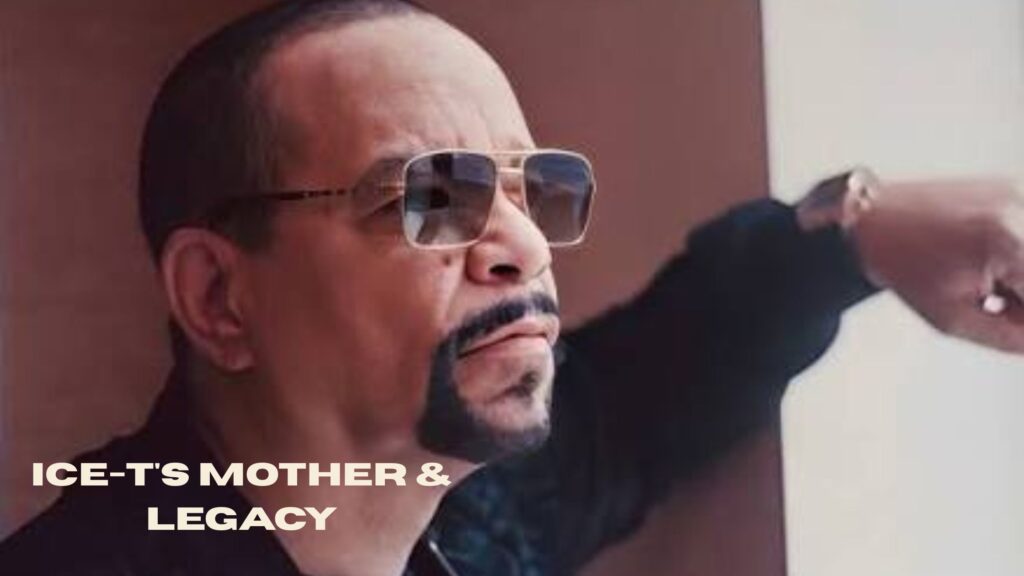
Alice Marrow is best remembered publicly as the mother of Tracy Lauren Marrow, the young boy who would later become known around the world as Ice-T. On the surface, that may seem like a simple part of her story, but it offers an important glimpse into the childhood and family background of one of hip-hop’s most recognisable figures.
Ice-T’s career has covered a remarkable range of work, from his early days in hip-hop and heavy metal to acting, writing, television and cultural commentary. Yet long before he became a household name, his earliest experiences were shaped by his family. His mother, Alice, was an important part of those formative years, although she sadly did not live to see the career her son would eventually build.
Unlike many relatives of famous people, Alice Marrow was never a public figure herself. She did not seek media attention, publish a memoir or establish a career in entertainment. As a result, relatively little reliable information about her life exists in the public record. Most of what is known comes from Ice-T’s recollections of his childhood and established accounts of his early life.
That limited record makes it important to approach Alice’s story carefully. There is enough information to understand her place in Ice-T’s childhood, but not enough to create a detailed biography without relying on speculation. Her story is therefore best told through the facts that have been publicly documented and the memories her son has shared over the years.
One of the defining parts of Alice Marrow’s story is the early loss experienced by her family. She died while Tracy was still a child, leaving a profound absence during his formative years. Following her death, Ice-T was raised for several years by his father, Solomon Marrow.
Tragedy struck again when Solomon later died, leaving Tracy without both of his parents while he was still young. He eventually moved to Los Angeles, where his life took a very different direction. Over time, Tracy Lauren Marrow became Ice-T, developing a career that would make him one of the influential voices in West Coast rap before establishing himself as an actor and television personality.
Alice Marrow may not have lived to witness any of that success, but her place in his early story remains significant. Her life is part of the personal history behind the public figure, and understanding that history provides a little more context for the experiences that shaped Ice-T before fame entered his life.
Early Years and Family Roots
Very little is publicly documented about Alice Marrow’s own early years. A number of online biographies repeat details about her birth, birthplace and ancestry, but many of those claims are not supported by clear primary sources. The more cautious account is that Alice was a Black woman whose family has been linked to Louisiana roots. Beyond that, there is not enough reliable information to describe her childhood in detail without risking speculation.
Alice married Solomon Marrow, and the couple had one well-documented child, Tracy Lauren Marrow. Born on 16 February 1958 in Newark, New Jersey, Tracy would later become famous as Ice-T. The family eventually settled in Summit, New Jersey, where he spent his early childhood. Long before Los Angeles became central to his public identity, his formative years were shaped by life in New Jersey, including his early experiences with family, race, community and loss.
Ice-T has spoken about the differences in his parents’ appearance and family background. He described his mother as fair-skinned and later compared her appearance to well-known Black actresses such as Dorothy Dandridge and Lena Horne. His father, Solomon, was darker-skinned and became the parent responsible for raising Tracy after Alice’s death. These recollections come from Ice-T’s own memories and offer a personal glimpse into the family, although they cannot provide a complete picture of Alice’s life.
Growing Up in New Jersey
Alice spent the early years of her son’s childhood raising him in New Jersey. The ordinary nature of those years stands in striking contrast to the public life Ice-T would eventually lead. Before the music, acting roles and television success, he was simply a young boy growing up in Summit, surrounded by the routines of family life.
Ice-T has recalled everyday moments from his childhood that give a sense of the home he shared with his parents. Alice was involved in looking after her son and took part in traditional domestic activities, including knitting and crocheting. He has also remembered quilts around the family home, small but vivid details that offer a more personal picture of his mother than a list of basic biographical facts ever could.
His childhood in Summit also exposed him to questions of race and social difference at an early age. Ice-T has recalled playing with both Black and white children and gradually becoming aware that people were not always treated equally. His light complexion sometimes placed him in a complicated position, giving him an early view of racial attitudes that he did not fully understand as a child.
Those experiences became part of his understanding of the world around him. His memories of Alice are particularly significant because they show how she responded when her young son encountered situations involving race and prejudice. Rather than being remembered only as a name in his family history, Alice emerges through these recollections as a mother who was present during the earliest experiences that helped shape her son’s understanding of identity and society.
The Mother Ice-T Remembered
One of the clearest memories Ice-T has shared about his mother comes from a childhood conversation about racism. When he asked Alice about the prejudice he was beginning to notice, she reportedly gave him a simple answer: “Honey, people are stupid.” Rather than offering a complicated explanation, she gave her young son a straightforward way of understanding behaviour that he could not yet fully make sense of.
That brief response reveals something about Alice’s role in Ice-T’s childhood. In his memories, she was not an abstract figure from his family history, but a mother trying to help her son make sense of an unfair world. She did not suggest that racism was insignificant or that everyone would treat him kindly. Instead, she offered a practical perspective that could help him recognise ignorance without allowing it to define him.
The lesson appears to have stayed with Ice-T well into adulthood. He has returned to similar ideas when speaking about criticism, racism and the opinions of other people. For someone who would later experience controversy, censorship debates, media criticism and public scrutiny, that simple childhood message became a useful way of dealing with people who judged him without understanding him. Alice’s influence may have been formed in ordinary conversations, but its impact remained part of his outlook.
Alice Marrow’s Personality and Private Life
Because Alice Marrow lived outside the public eye, there is no detailed record of her personality or adult life. Ice-T has remembered her as intelligent and supportive, while also acknowledging that, as a child, he naturally knew only certain parts of her life. That distinction matters. A child remembers a parent through everyday moments, familiar habits, conversations and small details rather than through the complete history of an adult’s experiences.
Some of Ice-T’s memories focus on Alice’s activities around the home. He recalled that she knitted and crocheted and that handmade quilts were part of the family environment. These details may seem ordinary, but they offer a more genuine glimpse into her life than many of the unsupported claims that appear online.
There is also value in acknowledging what remains unknown. Alice was not a celebrity and did not create a public record for future generations to examine. Her life centred on her family, home and community rather than public attention. A responsible account of her story therefore needs to recognise those limits instead of presenting speculation as fact.
Alice and Solomon Marrow’s Family Life
Alice’s marriage to Solomon Marrow provided the family setting in which Ice-T spent his earliest years. Solomon was Tracy’s father, and after Alice died, he continued raising their son for several years. Ice-T has described his father as a hardworking and responsible man who kept the household going after the loss of his wife.
Very little detailed information about Alice and Solomon’s marriage is publicly available. There are no substantial interviews from Alice herself or a personal memoir documenting their relationship from her perspective. Most of what can be understood comes indirectly through Ice-T’s memories of his childhood and the family circumstances surrounding him.
The family’s life changed dramatically after Alice’s death. Solomon remained responsible for raising Tracy, but the loss inevitably altered the household. Ice-T has recalled his father as someone who provided for him and maintained the home, although emotional conversations were not always easy. This does not mean Solomon was uncaring. Rather, it reflects the different way the family functioned after losing Alice.
Her absence became particularly significant because she was the first of Ice-T’s parents to die. The loss changed his childhood and became an important part of the family history he would later describe.
The Loss of Alice Marrow
Alice Marrow died from a heart attack when Ice-T was in the third grade. This is one of the better-established details about her life because Ice-T has spoken about it himself. He has also corrected versions of the story that claim both of his parents died in a car accident. According to Ice-T, his mother and father both died from heart attacks, several years apart.
Alice’s death came when her son was still very young. Losing a parent at that age can be difficult to understand, particularly when a child has limited language for grief. Ice-T has recalled aspects of the experience and has spoken about being protected from some of the formal rituals surrounding his mother’s death.
His recollections also suggest that he did not respond to the loss in the way adults might expect a grieving child to behave. He has said that he did not cry when his mother died. That should not necessarily be interpreted as a lack of emotion. Children can respond to sudden bereavement through shock, confusion or emotional withdrawal, with the deeper impact sometimes becoming clearer much later.
For Ice-T, Alice’s death became one of the earliest major losses in his life. It was followed several years later by the death of his father, leaving him without either parent while he was still young.
Life After His Mother’s Death
After Alice died, Solomon continued raising Tracy in New Jersey, with support from other people around the family. The household continued, but life had changed significantly. Ice-T was growing up without the mother whose presence had shaped his earliest childhood memories.
The loss of Alice was followed several years later by another devastating event. Solomon also died from a heart attack, leaving Tracy without both of his parents while he was still a child.
After his father’s death, Ice-T eventually moved to Los Angeles to live with relatives. The move marked a major turning point. He went from his childhood surroundings in New Jersey to a very different environment in California, where his teenage years and early adulthood would unfold.
His eventual transformation from Tracy Marrow into Ice-T, the rapper, actor and cultural figure, came much later. It would be too simple to suggest that his entire career was caused by the loss of his parents. However, those early experiences clearly formed an important part of his personal history.
Alice’s death was therefore more than a single tragic event in his childhood. It was the beginning of a period of change that would eventually take him away from New Jersey and into a very different life in Los Angeles. Her influence remained through the memories he carried with him, particularly the everyday lessons and conversations that had taken place before her death.
From Tracy Marrow to Ice-T
Alice Marrow died before her son became known as Ice-T, but her place in his story comes right at the beginning of that journey. After moving to Los Angeles, Tracy Marrow found himself in an environment that was very different from his childhood in New Jersey. He went to school there, became exposed to gang culture, later served in the U.S. Army and eventually found his way into music. By the 1980s, he had established himself as an important figure in the development of West Coast hip-hop.
His early music attracted attention for the way it combined street experiences with sharp observation and storytelling. Rather than simply creating an image of toughness, Ice-T used his music to describe the pressures and realities surrounding violence, survival, temptation, identity and life on the streets. His debut studio album, Rhyme Pays, was released in 1987 and helped establish his reputation during the emergence of gangsta rap.
Alice was no longer alive when that career began, but the experiences of his childhood remained part of the person he became. The discipline, resilience and perspective he developed over time cannot be attributed to one person or one event, yet his early family experiences clearly formed part of his foundation.
Ice-T later expanded his career into acting, appearing in films before becoming a familiar television presence. His role as Detective Odafin “Fin” Tutuola on Law & Order: Special Victims Unit introduced him to a much wider audience, including many people who may not have known his music. His ability to move between music, acting and television became one of the defining features of his career.
Alice did not live long enough to see those achievements, but she was part of the early family life that shaped the child who would eventually take on all those different roles.
Alice Marrow’s Public Legacy
Alice Marrow’s place in the public record is closely tied to her son. Unlike many relatives of famous figures, she did not become known through a career, public appearances or media coverage of her own. Most of the attention surrounding her comes from Ice-T’s memories of his childhood and from people wanting to understand the family background behind his later success.
That makes her story both visible and incomplete. The public knows her primarily through the memories her son has shared, while much of her own adult life remains undocumented.
There is also no reliable public evidence that Alice accumulated a notable personal fortune or built a major business career. Claims about her supposed net worth, estate or financial assets should therefore be treated with caution. Her significance in Ice-T’s story is about family and personal influence, rather than wealth.
It is also easy to view Alice through the lens of her son’s celebrity, but her life was far removed from the world of entertainment fame. She was a mother raising her son in New Jersey, and her story became publicly relevant only because of what Tracy Marrow eventually achieved.
Separating Facts From Online Claims
Writing about Alice Marrow can be difficult because many websites repeat the same biographical details without clearly identifying their sources. Exact dates, places, ancestry claims and descriptions of her personality are sometimes presented as established facts even when there is little publicly available evidence behind them.
One of the clearest examples concerns the circumstances of her death. Some online biographies have claimed that Alice and Solomon Marrow died in a car accident. Ice-T himself has rejected that version, explaining that both of his parents died from heart attacks several years apart. His own account is therefore more reliable than an unsourced biography repeating the accident story.
Her family background also needs to be described carefully. Alice is sometimes identified as Louisiana Creole, while other accounts refer more generally to Louisiana family roots. Without more detailed primary documentation, it is better to avoid presenting a precise ancestry claim as definitive.
This distinction matters because a biography should separate what has been confirmed from what has simply been repeated. Alice’s story does not need invented details to make it meaningful.
Why Alice Marrow’s Story Matters
Alice Marrow remains relevant because she was part of the earliest chapter of Ice-T’s life, long before he became a rapper, actor, author or television personality. Before the public knew Ice-T, he was Tracy Marrow, a young boy learning about family, identity and the world around him.
The lessons children receive from their parents are often delivered through ordinary conversations rather than dramatic moments. Ice-T’s memories of Alice show exactly that. Her influence survives through the small details he remembers, including the way she responded when he began asking questions about racism and the everyday activities he associated with his mother.
Her story also highlights something that is often overlooked when discussing famous people. The individuals who shape a person’s early life may never become famous themselves. They may leave behind little public documentation, yet their influence can remain with their children for decades.
Alice’s biography is therefore necessarily incomplete. There is much about her life that cannot be established from reliable public sources, and those gaps should be acknowledged rather than filled with assumptions. What can be said with confidence is that she was Ice-T’s mother, that she died while he was still a child, and that memories of her continued to form part of the story he later told about his upbringing.
Her legacy does not need a celebrity career or a public fortune to matter. In Ice-T’s life, it exists in something much more personal: the memories of a son who carried parts of his mother’s influence with him long after she was gone.
Frequently Asked Questions About Alice Marrow
Who Was Alice Marrow?
Alice Marrow was the mother of Tracy Lauren Marrow, who later became famous as Ice-T. She was married to Solomon Marrow, and the family lived in New Jersey during Tracy’s early childhood. Alice herself was not a public figure, so most of the reliable information about her comes from Ice-T’s recollections and established accounts of his childhood.
What Was Alice Marrow Known For?
Alice Marrow is primarily known as Ice-T’s mother. There is no reliable evidence that she had a significant public career in entertainment, politics or the media. Her importance in the public record comes largely from the role she played in her son’s early life and the memories he later shared about her.
How Did Alice Marrow Die?
Alice Marrow died from a heart attack while Ice-T was in the third grade. Ice-T has previously corrected claims that his parents died in a car accident. According to his own account, both Alice and Solomon Marrow died from heart attacks, several years apart.
Did Alice Marrow Have Louisiana Roots?
Alice’s family background has often been associated with Louisiana, and some accounts describe her as having Louisiana Creole heritage. However, the precise details of her ancestry are not fully documented in widely available public sources. It is therefore better to describe the Louisiana connection cautiously rather than present specific ancestry claims as confirmed facts.
Did Alice Marrow Have a Career?
There is no detailed, reliable public record documenting Alice Marrow’s professional career. Some websites describe her as a homemaker, but those claims are not always supported by clear sources. What is much better established is her role as a mother and her presence in Ice-T’s early family life.
Did Alice Marrow Have Other Children?
Publicly available biographies most consistently identify Tracy Lauren Marrow, later known as Ice-T, as the child of Alice and Solomon Marrow. There is no widely established public record confirming that Alice had other children. Since family matters can remain private, claims beyond the documented information should be treated carefully.
What Did Ice-T Say About His Mother?
Ice-T has remembered Alice as intelligent, supportive and straightforward. One of the most memorable stories he has shared concerns a conversation about racism during his childhood. When he asked about the prejudice he encountered, Alice reportedly told him, “Honey, people are stupid.” He later looked back on those words as a simple but lasting lesson about not allowing other people’s ignorance to control him.
A Lasting Legacy Beyond Fame
Alice Marrow’s life cannot be documented in the same way as the career of a celebrity. She did not leave behind a large collection of interviews, public appearances, business records or media coverage. Much of what is known about her comes through the memories of her son.
Yet the lack of a large public record does not make her story insignificant. Alice was part of Ice-T’s earliest years and helped shape the environment in which he grew up. Her influence can be seen through the childhood memories he has chosen to share, from conversations about racism to the everyday details of family life.
The most meaningful parts of her story are also the simplest. She raised her son during his early childhood, gave him advice about dealing with prejudice, created a home filled with familiar routines and interests, and died suddenly while he was still young. These details offer a more genuine picture of her life than unsupported claims ever could.
Alice’s story also highlights the importance of separating established facts from speculation when writing about the relatives of famous people. Because information about private individuals can be limited, it is easy for repeated online claims to become accepted as fact. A careful biography should do the opposite by clearly distinguishing what is known from what remains uncertain.
Alice Marrow never had the opportunity to see her son become Ice-T, one of the influential figures in hip-hop and a successful actor and television personality. But her influence did not disappear with her death. The memories and lessons he carried from childhood remained part of his story.
For someone who lived largely outside the public eye, that may be her most enduring legacy. She was not famous in her own right, but she helped shape the person who eventually became famous.